structural engineering intern
to protect company proprietary information, diagrams shown below do not accurately portray hardware
💼 Overview:
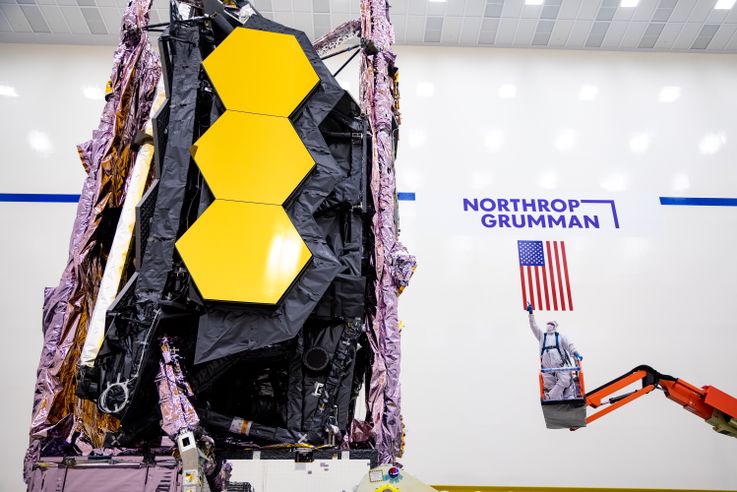
Developed flight hardware and tooling for fast-paced programs such as Class-C military communication satellites and Air Force Research Lab (AFRL) proposals.
Intern in the Mechanisms and Deployable Products department
⛔ Problems:
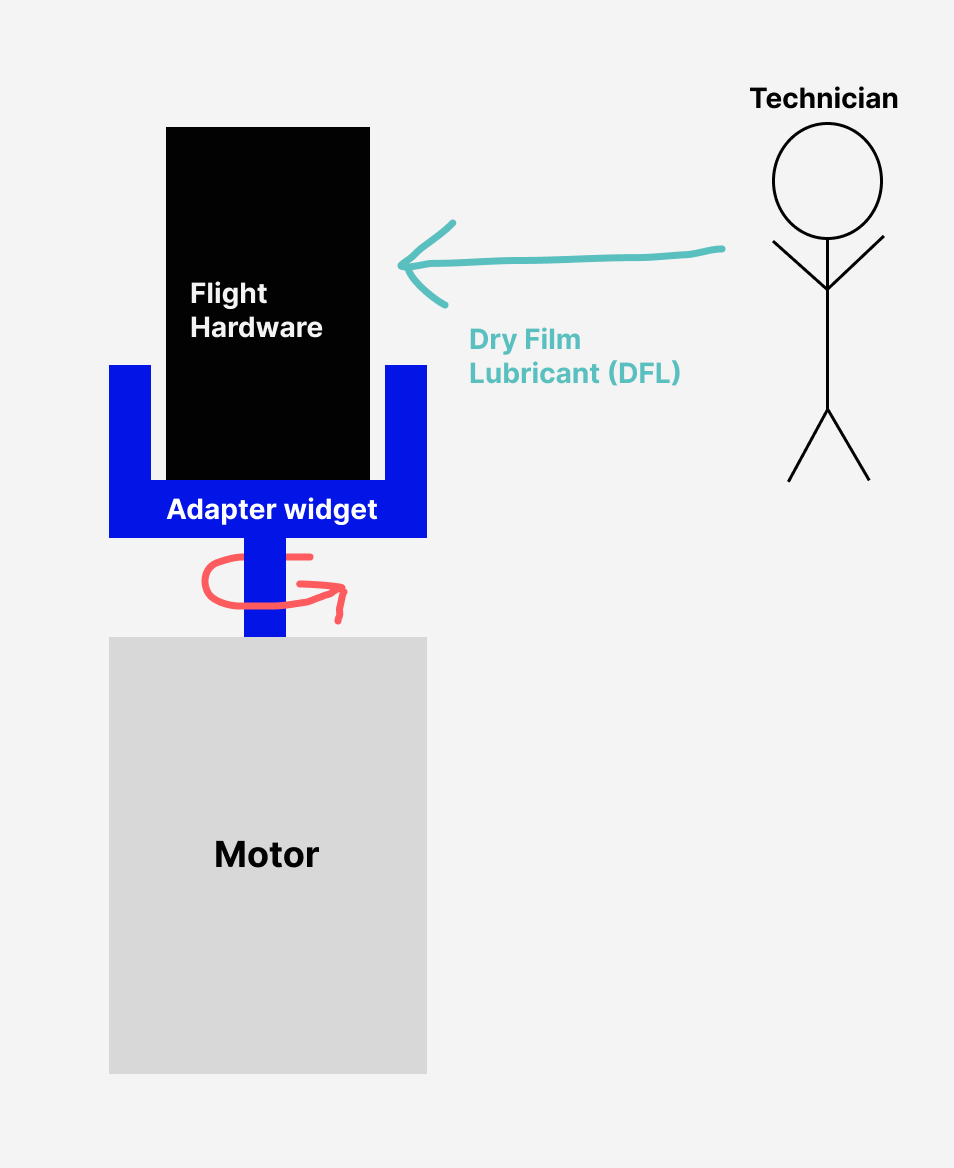
- Technicians were complaining that applying dry film lubrication (DFL) to flight-hardware threads was too time consuming and laborious.
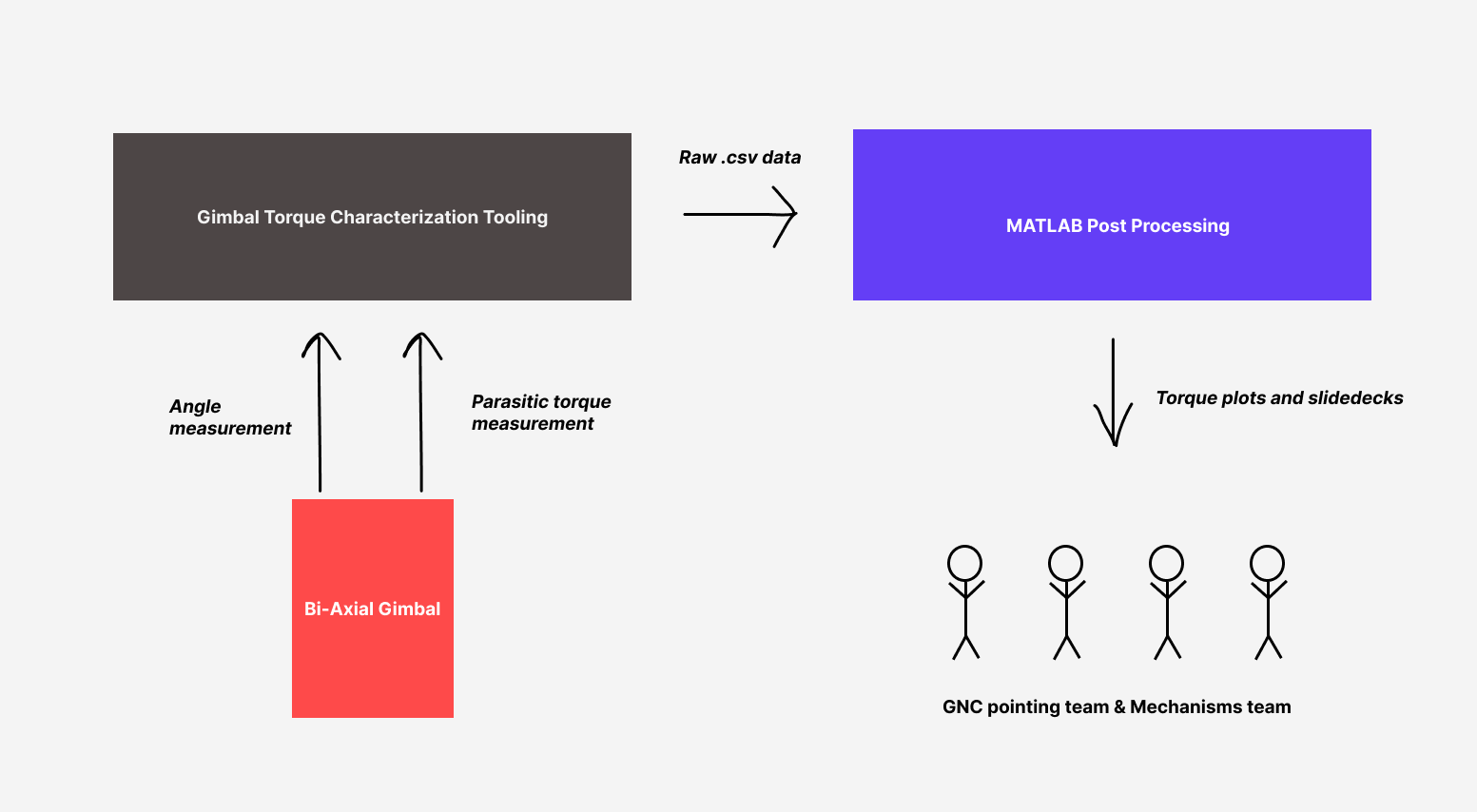
- Classified program needed a way to characterize the parasitic torques generated within a satellite biaxial gimbal in order to inform the design of guidance, navigation, and control (GNC) algorithms
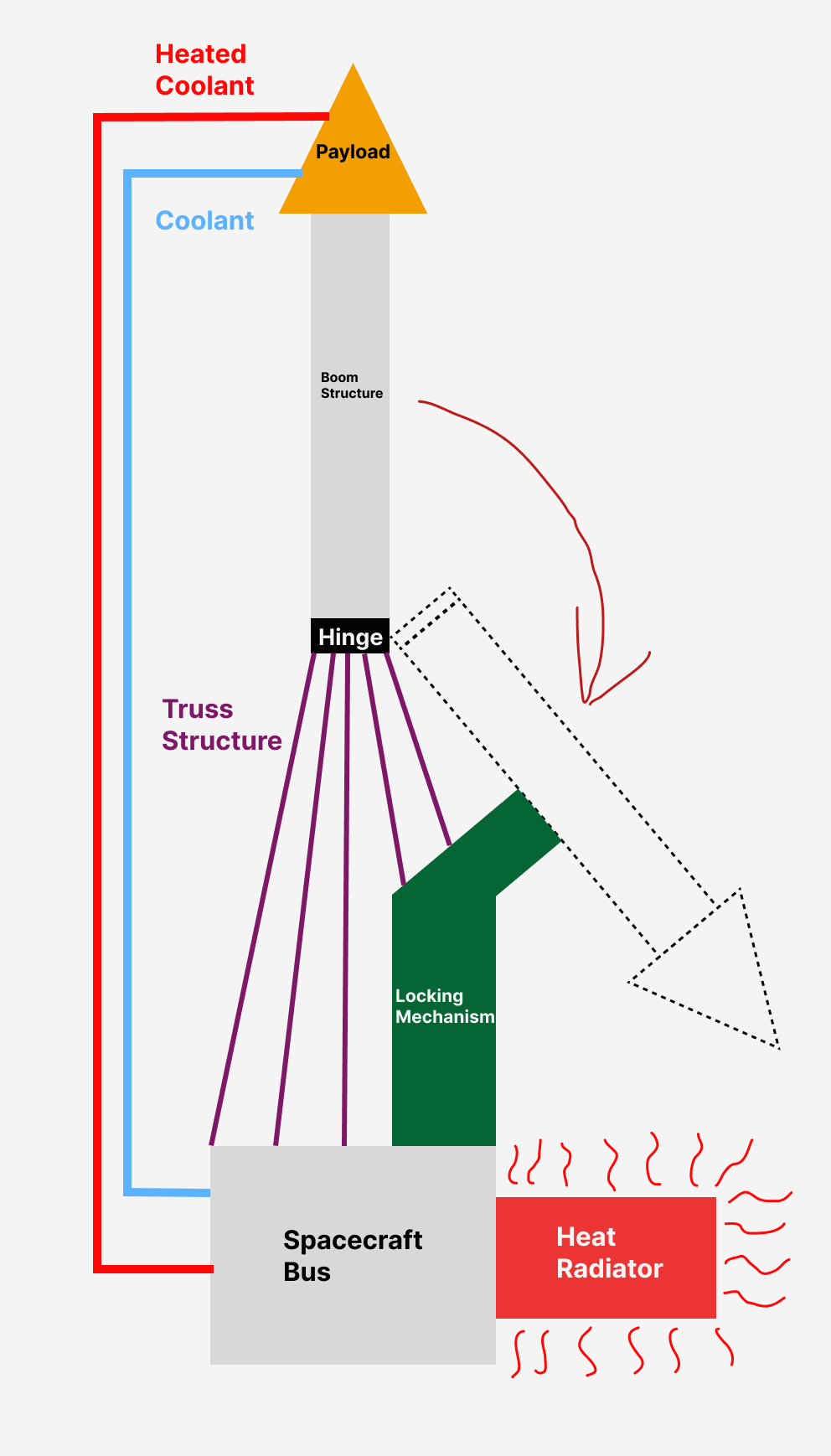
- Unclassified program urgently needed a 3D CAD model of their entire spacecraft for several reasons:
- to provide the customer (Air Force Research Lab) with a visual rough concept
- to verify systems requirements
- to ensure smooth integration of subsystems developed by industry partners Westinghouse and Astrobotic
🔧 Work done:
- Designed 7 tooling setups in CATIA V5 to expedite the dry film lubrication process on flight hardware threads.
- Conducted experiments to characterize parasitic torques within a satellite biaxial gimbal. Ran ~100 tests on the azimuth and elevation axes. Created a MATLAB script to interpret and graph raw data collected by a custom-made testing computer. Created PowerPoints and presented torque data to GNC and Mechanisms engineers.
- Responsible for the system level CAD design of an experimental spacecraft. Came up with notional designs for payload locking mechanisms, hinges, cooling systems, and electrical harness routing. Saved the program ~$500k – $1M by reusing certain geometric features from another Northrop spacecraft.
- Participated in cross-company meetings where I pitched flight-hardware design changes to engineers at Westinghouse and Astrobotic.
 Aaron Jin